Toy Box Clipart Set: A Designer's Review for Embroidery
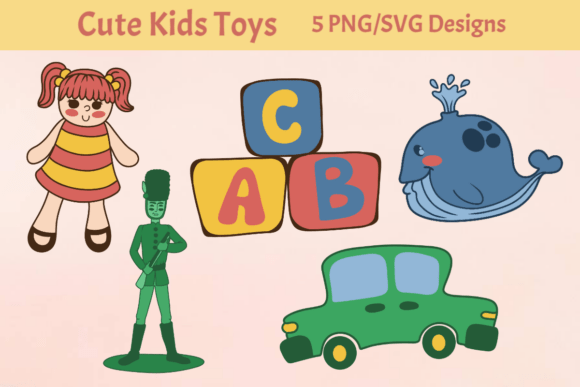
As someone who spends more time staring at stitch maps than most people spend on their phones, I approach new design assets with a mix of curiosity and skepticism. When I first opened the Toy Box Clipart Set, my initial reaction wasn't just about whether the images were cute—they are—but whether they would translate well from a flat Graphics file into a tangible machine embroidery design. This collection, featuring a plush doll, alphabet blocks, a toy soldier, a whale, and a mini car, sits squarely in the Crafts category, but its potential extends far beyond simple digital prints. For us Etsy sellers and craft business owners, the real question is always: how does this look when the needle hits the fabric?
First Impressions and Visual Personality
The mood of the Toy Box Clipart Set is undeniably cheerful and nostalgic. The illustrations carry a soft, hand-drawn quality that feels perfect for nursery environments or playful boutique branding. From a designer's eye, the shapes are distinct and recognizable, which is crucial for embroidery. Unlike complex photographic images that struggle to simplify into stitches, these five icons have clear silhouettes. The whale has a friendly curve, the blocks are geometrically sound, and the toy soldier has a classic profile. This visual clarity suggests that, with the right digitizing, these could make excellent applique design candidates or stand-alone motifs using satin stitch borders and fill stitch bodies.
However, seeing a graphic is one thing; imagining it as a finished product is another. The level of detail in the original Graphics files seems moderate. For an embroidery project, this is often a sweet spot. Too much detail gets lost in the thread, while too little looks amateurish. The charm here lies in the simplicity, which allows the texture of the thread to become part of the art rather than fighting against it.
Real-World Application: The Custom Tote Scenario
To truly evaluate this set, I imagined a specific client request: a custom order for a local daycare needing branded tote bags for a spring fundraiser. They wanted something fun but professional enough for parents to actually use. This is where the Toy Box Clipart Set shines. Picture a canvas tote bag design featuring the mini car and the whale stitched in bright, primary colors. Because the subjects are universally recognized toys, they bridge the gap between "babyish" and "playful," making them suitable for a wider age range than typical infant motifs.
If I were producing these for a small shop product line, I would likely group the alphabet blocks and the plush doll for a sweatshirt embroidery project. Imagine a heather grey youth hoodie with the blocks stitched across the chest in a slightly distressed style to match the vintage feel of the clipart. The layout possibilities are endless. You could stack them vertically for a pocket accent on an apron or spread them out horizontally for a pillow cover. The versatility of these five elements allows for dynamic composition without needing to alter the core artwork significantly.
Navigating Fabric and Stitch Challenges
While the designs are promising, practical execution requires caution. Not every surface is ready for these motifs. If you are planning to use these on stretchy fabrics like jersey knits for baby embroidery, you must be vigilant about your stabilizer choice. The geometric nature of the alphabet blocks, in particular, could distort if the fabric shifts during stitching. A cut-away stabilizer would be non-negotiable here to maintain the integrity of the straight lines.
Furthermore, consider the hoop size limitations. If you are working on curved surfaces like caps or hats, the depth of the hoop might restrict how large you can make the toy soldier or the whale. Small details, such as the eyes on the plush doll or the windows on the mini car, need careful attention. If the original digital embroidery file (once digitized) has a high stitch density, these tiny areas could become puckered messes, especially on textured fabrics like towels or corduroy. I always advise testing on scrap fabric first. Run a sample on the actual material you intend to sell to see how the thread colors interact with the base fabric color. Dark fabrics might require a white underlay or a different color palette to ensure the design pops.
Commercial Viability and Brand Trust
For commercial embroidery ventures, the perceived value of the handmade product is everything. Using a cohesive set like the Toy Box Clipart Set helps build brand consistency. If a customer buys a bib with the whale, sees a matching pillow with the car, and then spots a t-shirt with the blocks, they recognize your shop's aesthetic immediately. This recognition builds trust and encourages repeat purchases.
However, professionalism dictates that we do not just slap a graphic onto a garment. The transition from screen to stitch must be flawless. Poorly executed corners on the toy soldier or uneven fills on the whale can cheapen the look of even the most expensive garment. Before listing these as personalized gift options or holiday embroidery items, review the stitch path. Ensure that jump stitches are minimized and that trims are clean. A messy backside can ruin the comfort of a baby item, leading to returns and negative reviews.
Essential Designer Notes for Success
If you decide to incorporate this set into your inventory, keep these practical steps in mind:
- Verify Licensing: Before selling any custom apparel or digital products, confirm the license terms. Can you sell the physical embroidered item? Can you sell the digitized file itself? Never assume.
- Test Contrast: Create black and white mockups to ensure the design holds its shape without relying on color. This is vital for printable mockup previews and for customers who prefer monochrome styles.
- Check Density: If you are digitizing these yourself from the Graphics source, pay close attention to stitch density. Too many stitches in the block letters can cause fabric pull.
- Scale Appropriately: What looks good on a poster might be too intricate for a 2-inch embroidered patch. Resize and simplify details for smaller applications.
- Fabric Compatibility: Remember that light fabrics show shadows from dense stitching, while dark fabrics can make light threads look dull if the underlay isn't sufficient.
In conclusion, the Toy Box Clipart Set offers a delightful foundation for a variety of creative projects. Its strength lies in its charming, accessible themes that resonate with both children and adults. However, its success in the real world depends entirely on the skill of the maker. By respecting the limitations of fabric and thread, and by approaching each embroidery file with a critical, experienced eye, you can turn these simple illustrations into high-value design assets that elevate your craft business. Whether you are making gifts for family or stock for your online store, let the quality of your stitching be the thing that makes these toys come to life.